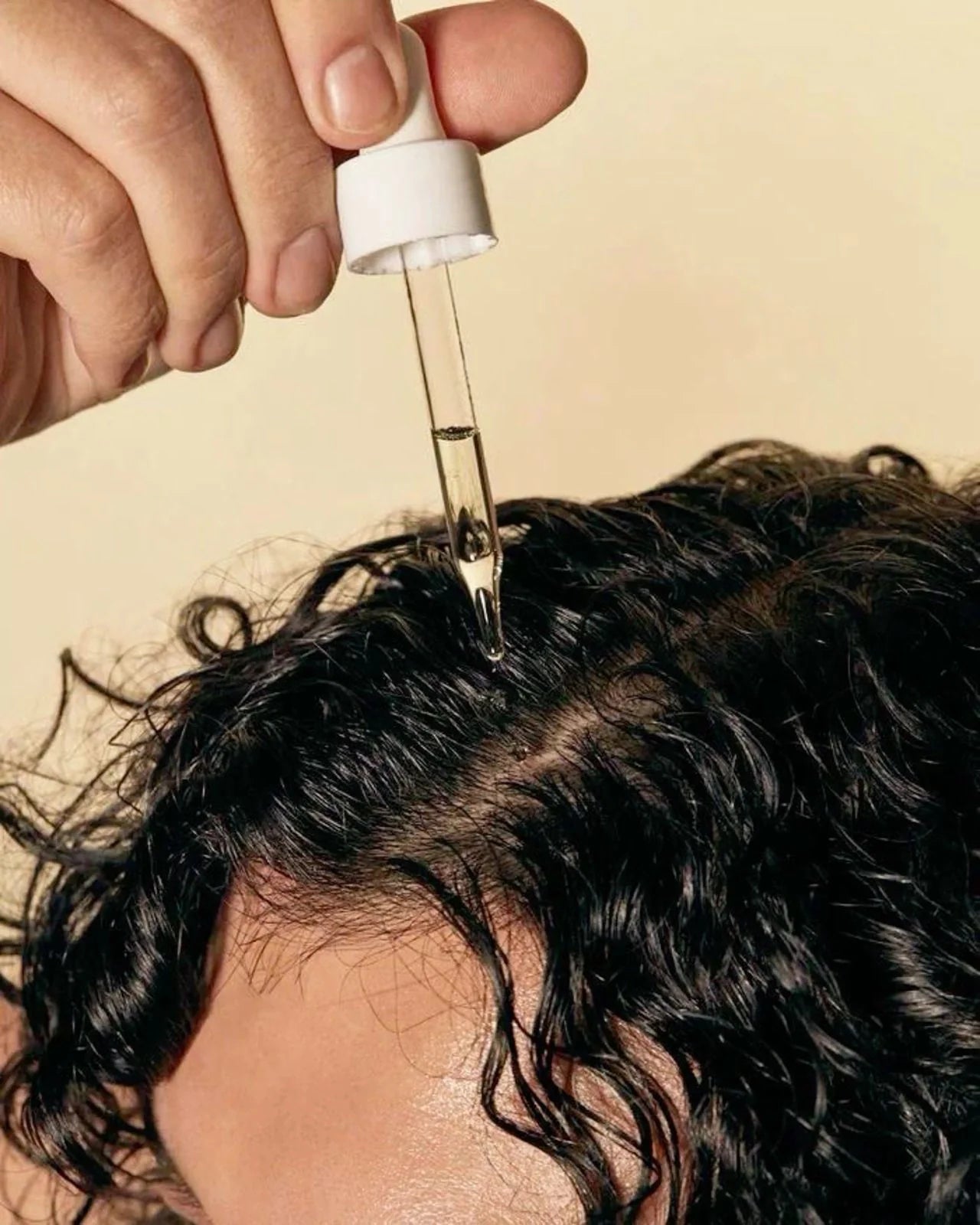
Every hair strand you can see is already dead. It emerged from a follicle in your scalp, was shaped by cells in the dermal papilla, and was pushed outward by new growth below it. What happens at the scalp determines the diameter, strength, and growth rate of every strand that follows. A haircare routine that ignores the scalp is a routine that works on the consequences rather than the cause.
This is not a new concept in Korean and Japanese beauty. Scalp-first haircare has been standard practice in East Asian beauty traditions for decades. It is, however, a relatively recent framework in the US market — one that is still arriving slowly despite significant evidence that it produces better outcomes for hair health than strand-focused approaches.
The scalp is skin
This statement sounds obvious, but its implications are not obvious in practice. The scalp has a higher density of sebaceous glands than almost any other area of the body — approximately 900 sebaceous glands per square centimeter compared to around 100 on the forearm. It supports a distinct microbial ecosystem, dominated primarily by Malassezia yeast species, which plays a direct role in conditions like seborrheic dermatitis and dandruff. Its pH is approximately 5.5, and disruption of that pH — through alkaline shampoos, over-washing, or buildup from heavy products — affects both the microbial balance and the integrity of the skin barrier.
None of these facts are meaningfully engaged with by a routine that consists only of shampoo and conditioner. A shampoo cleanses. A conditioner coats the strand. Neither targets the scalp as a living tissue with specific biological needs.
What the follicle actually needs
Hair follicles cycle through three phases: anagen (active growth), catagen (transition), and telogen (rest and shedding). The duration of the anagen phase determines maximum hair length and is largely genetic — but scalp conditions can shorten it prematurely. Chronic inflammation, sebum oxidation, poor scalp circulation, and microbial imbalance have all been associated with disrupted follicle cycling.
Scalp-first haircare addresses each of these factors through targeted products: scalp exfoliants to remove dead skin cells and oxidized sebum, scalp serums with active ingredients like niacinamide, peptides, or panthenol to support skin barrier function, and scalp massage to improve circulation. None of this is exotic. It is the same logic applied to facial skincare, directed at the scalp.
Scalp exfoliation
Scalp exfoliation removes the buildup that shampoo alone cannot address: dead skin cells, product residue, oxidized sebum, and environmental particulates. Two forms exist — physical (scalp scrubs with salt, sugar, or silica particles) and chemical (exfoliants using salicylic acid or glycolic acid). Chemical exfoliants are generally more effective for scalp-specific concerns like dandruff or seborrheic dermatitis because salicylic acid is lipophilic and penetrates the sebum-rich follicular openings that accumulate the most debris.
Frequency depends on scalp type: oily scalps can exfoliate weekly; drier or more sensitive scalps should limit it to every two to three weeks. Over-exfoliation disrupts the microbiome and can worsen the conditions it is intended to address.
Scalp serums and treatments
A scalp serum is a leave-on treatment applied directly to the scalp skin — not rinsed out, not applied to the lengths. This format distinction matters. Rinse-out products spend seconds to minutes in contact with the scalp before being washed away. Leave-on serums maintain sustained contact, allowing active ingredients to perform their intended function.
Key ingredients to look for: niacinamide (vitamin B3) for sebum regulation and skin barrier support; caffeine for microcirculation; biotin and panthenol for follicle support; and peptides such as acetyl tetrapeptide-3, which has been studied for its role in supporting the follicle anchoring proteins that keep hair in the anagen phase longer.
Scalp massage
A 2016 study published in ePlasty by Koyama et al. found that standardized scalp massage — four minutes daily over 24 weeks — produced a measurable increase in hair shaft thickness. The mechanism is improved circulation to the dermal papilla, which sits at the base of each follicle and is responsible for delivering nutrients to the actively dividing cells that build the hair shaft. Better circulation means better nutrient delivery, and better nutrient delivery supports the anagen phase.
This requires no product. A simple fingertip or scalp massager tool used during serum application is enough to produce the effect over consistent practice.
How to build a scalp-first routine
- Step 1 — Pre-wash scalp treatment (1–2x per week): Apply a scalp oil or pre-shampoo treatment to dry scalp 20–30 minutes before washing. This protects the scalp barrier during cleansing and addresses any dryness or sensitivity before shampooing.
- Step 2 — Scalp exfoliant (1x per week): Work a scalp scrub or chemical exfoliant into the scalp before or in place of shampoo. Massage gently with fingertips. Rinse thoroughly.
- Step 3 — Shampoo: Focus the shampoo on the scalp, not the lengths. The scalp produces sebum; the lengths do not. Lengths are cleansed by rinse-off from the scalp application.
- Step 4 — Scalp serum (post-wash, leave-on): Apply a scalp serum to towel-dried scalp while the scalp is still slightly damp. Massage in for two to four minutes. Do not rinse.
- Step 5 — Strand care: Conditioner, treatment, or oil as needed on the lengths. These steps address the strand separately from the scalp work already done.
Sources
- Koyama T, et al. Standardized Scalp Massage Results in Increased Hair Thickness by Inducing Stretching Forces to Dermal Papilla Cells in the Subcutaneous Tissue. ePlasty. 2016;16:e8.
- Lambers H, et al. Natural skin surface pH is on average below 5, which is beneficial for its resident flora. International Journal of Cosmetic Science. 2006;28(5):359–370.
- Schwartz JR, et al. A comprehensive pathophysiology of dandruff and seborrheic dermatitis — towards a more precise definition of scalp health. Acta Dermato-Venereologica. 2013;93(2):131–137.
- Trüeb RM. The impact of oxidative stress on hair. International Journal of Cosmetic Science. 2015;37(S2):25–30.
Explore MDRN Beauty's scalp care lineup here. For more routine guidance, visit the MDRN Edit.